


Mobile intake, case records and a professional review workspace
Oculus Vita / OCV
Oculus Vita is a digital-health platform in development with a participant mobile app, an authorised healthcare-professional portal and an educational website. Its development scope connects guided questionnaires, permitted image or document attachments, case timelines, messages and follow-up. These are workflows for collecting and reviewing information; clinical interpretation remains with healthcare professionals.
In development. Public and Registered platform access are planned at €0, subject to release and programme availability.

Your starting point
Who this is for
- Public visitors exploring educational material and programme details
- Registered participants using enabled programme workflows
- Healthcare professionals with authorised roles and case access
- Programme teams managing configuration and educational publication
Customer value
What this helps you do
A case with its source material
Questionnaire answers, permitted attachments, messages and timeline events provide the material for an authorised professional to review.
Separate participant and professional workspaces
The mobile journey collects participant information; professional worklists and case access support the review responsibilities assigned by the programme.
Explore the product
Product capabilities
- Mobile questionnaires with saved drafts and case submission
- Permitted evidence attachments, case records and chronological follow-up
- Professional worklists, reviewer assignment and second-opinion routing
- Case-linked messages, appointment workflows and public or restricted education
Mobile intake and a case record
The mobile app is being developed for guided questionnaires, draft preparation, request submission and personal records. A submitted request keeps the participant’s answers and permitted evidence associated with the same case, rather than treating each upload as a separate concern.
Attach material to the reported concern
Enabled intake modules define the questions and permitted attachments. The development architecture includes controlled evidence uploads and case-linked storage for images or documents. What can be collected depends on the module and programme; an attachment is supporting material for review, not an automatically established finding.
Worklists, review and follow-up
The professional portal development scope includes authorised case worklists, reviewer assignment, evidence inspection, second-opinion routing, case messages and appointment workflows. Case history records the progress of the request. Professional access is approved separately and does not follow from ordinary registration.
A separate educational publishing channel
The educational website supports published learning articles, article previews and restricted reading. Public visitors can read public material; restricted content requires the appropriate authorisation. Education publishing is separate from personal case records and professional clinical work.
Explore Oculus Vita online
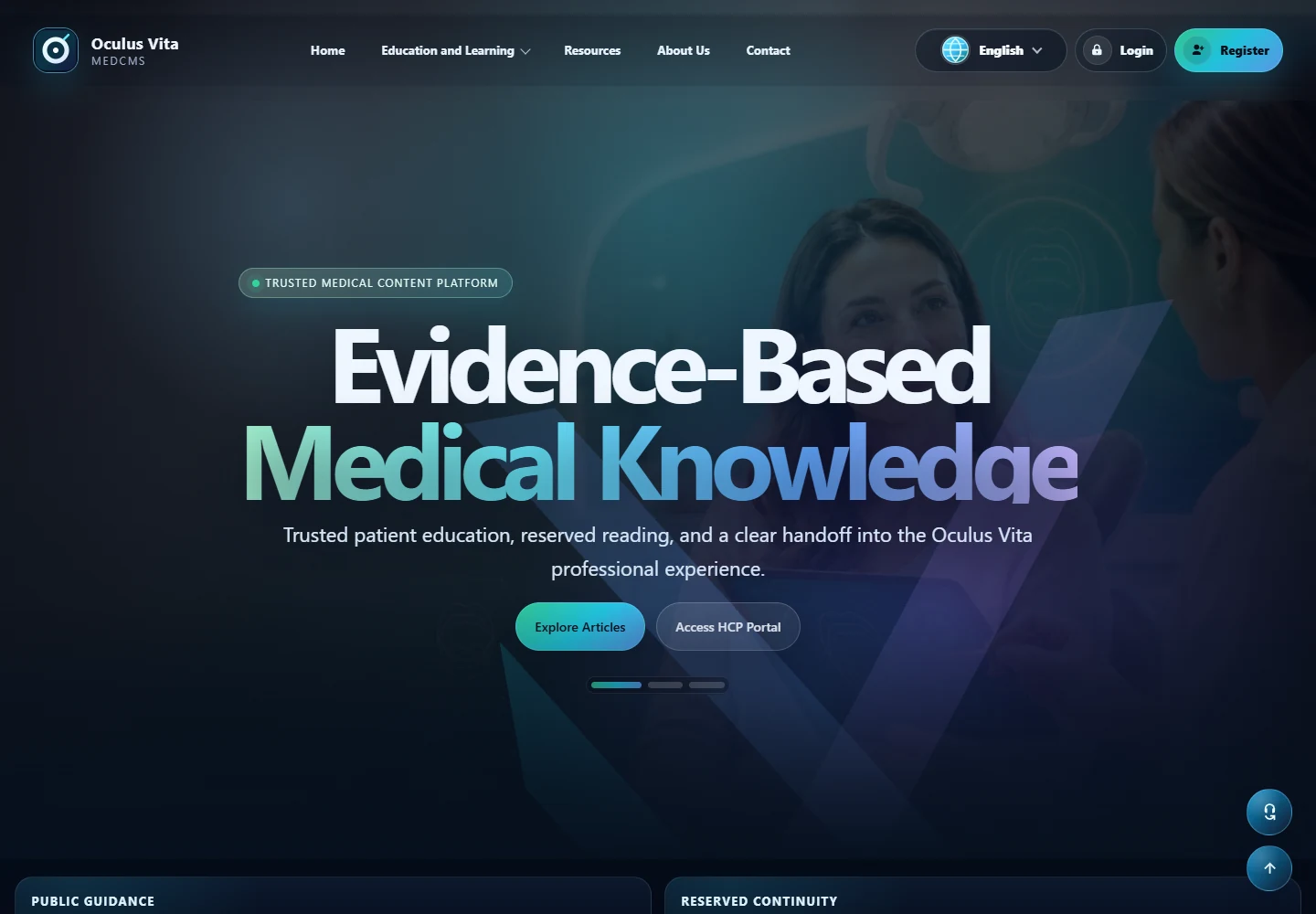
Education website
Learn about screening
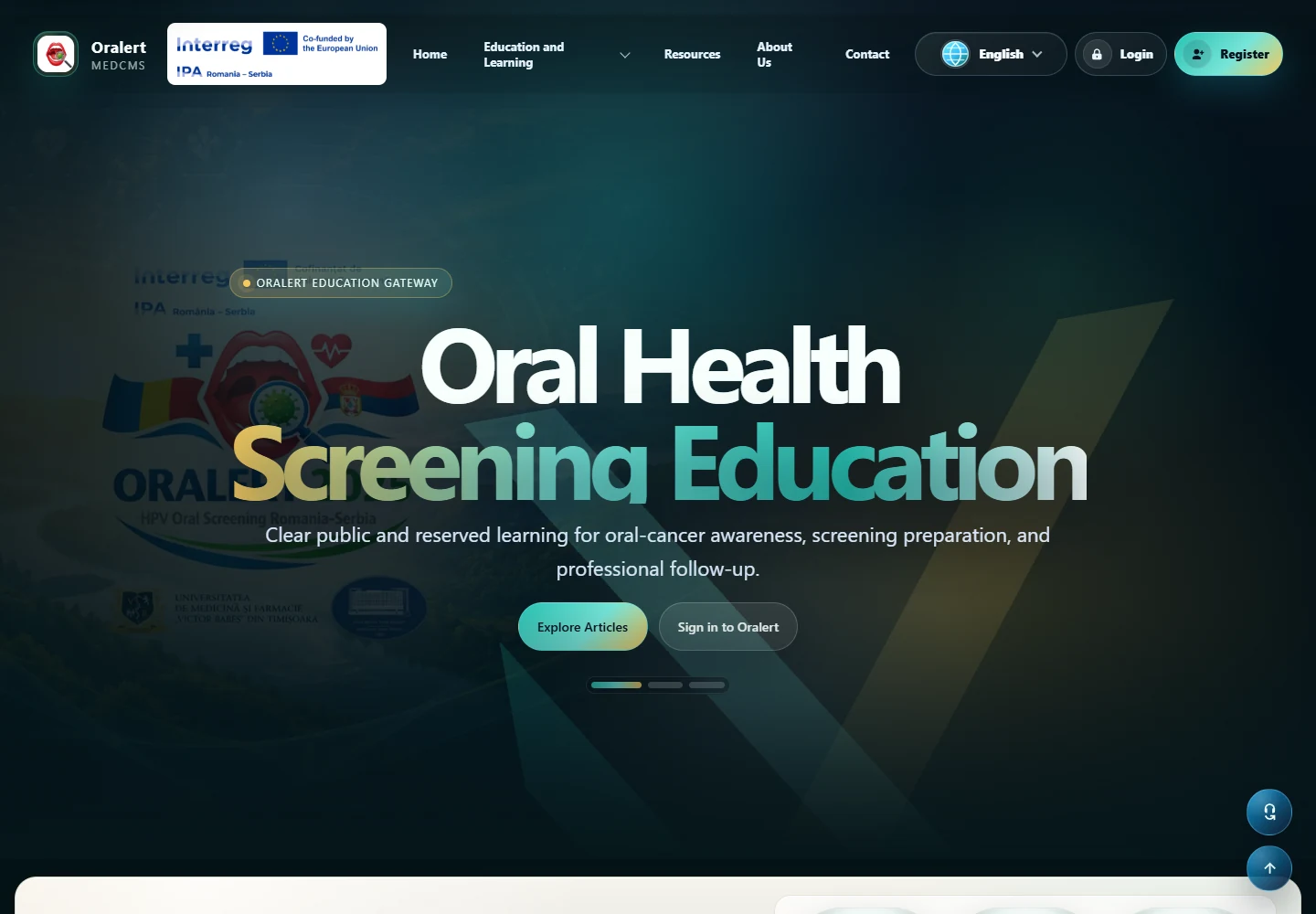
Education website
Explore Oralert
Public and Registered access: €0.
Two planned platform access modes, subject to release and programme availability. Professional access and clinical services have separate arrangements.
Public access
€0
- Public learning articles
- Public product and programme information
- Previews of restricted learning content
No account required. Personal check-ins, records and case communication require an account.
Registered access
€0
- Everything in Public
- Personal check-in and record workflows where enabled
- Restricted learning when authorised
- Case communication where enabled
Subject to product release, programme availability and access permissions. Professional workspace access requires separate approval.
Illustrative scenario
What a few minutes could add up to
Assumptions
- 1,000 participant journeys.
- Assume 2 to 5 minutes less repeated participant entry per journey.
- Assume 2 to 5 minutes less professional collation per journey.
1,000 journeys × (2–5 minutes) / 60 = 33.33–83.33 hours per side. Combined total of 66.67 to 166.67 hours, rounded to 67–167 hours.
Combined 67 to 167 hours difference.
Illustrative planning arithmetic, not measured OCV performance or a clinical outcome. This combines participant and professional time in two tasks; it excludes setup, training and any additional review effort. Validate the net effect in a pilot.
For participants
Mobile app
For healthcare professionals
Professional portal
For programme content
CMS & educational website
Discuss a defined OCV pilot
Describe the participants, intake questions, professional review responsibilities and follow-up you need. We can compare that workflow with the development scope and agree the evidence needed before a pilot.
Discuss an OCV pilot